 bang123
The WNBA has found itself engulfed in a heated national debate after a bombshell revelation involving two of its brightest stars. Angel Reese, the charismatic Chicago Sky rookie and one of the league’s most recognizable faces, is now at the epicenter of controversy following the leak of a private conversation in which she reportedly questioned Caitlin Clark’s place in the league.
According to a journalist’s exposé that quickly went viral, Reese allegedly remarked, “She didn’t grow up like us — she doesn’t get it. This sport was built by us, for us,” referring to Clark, the Indiana Fever’s rookie sensation and the most talked-about player in women’s basketball today.
The fallout has been swift and fierce, with fans, players, and commentators weighing in from every corner of the sports world. What started as a private conversation has now become a public flashpoint, raising questions about race, identity, and who gets to define the future of women’s basketball.
A Private Comment Goes Public
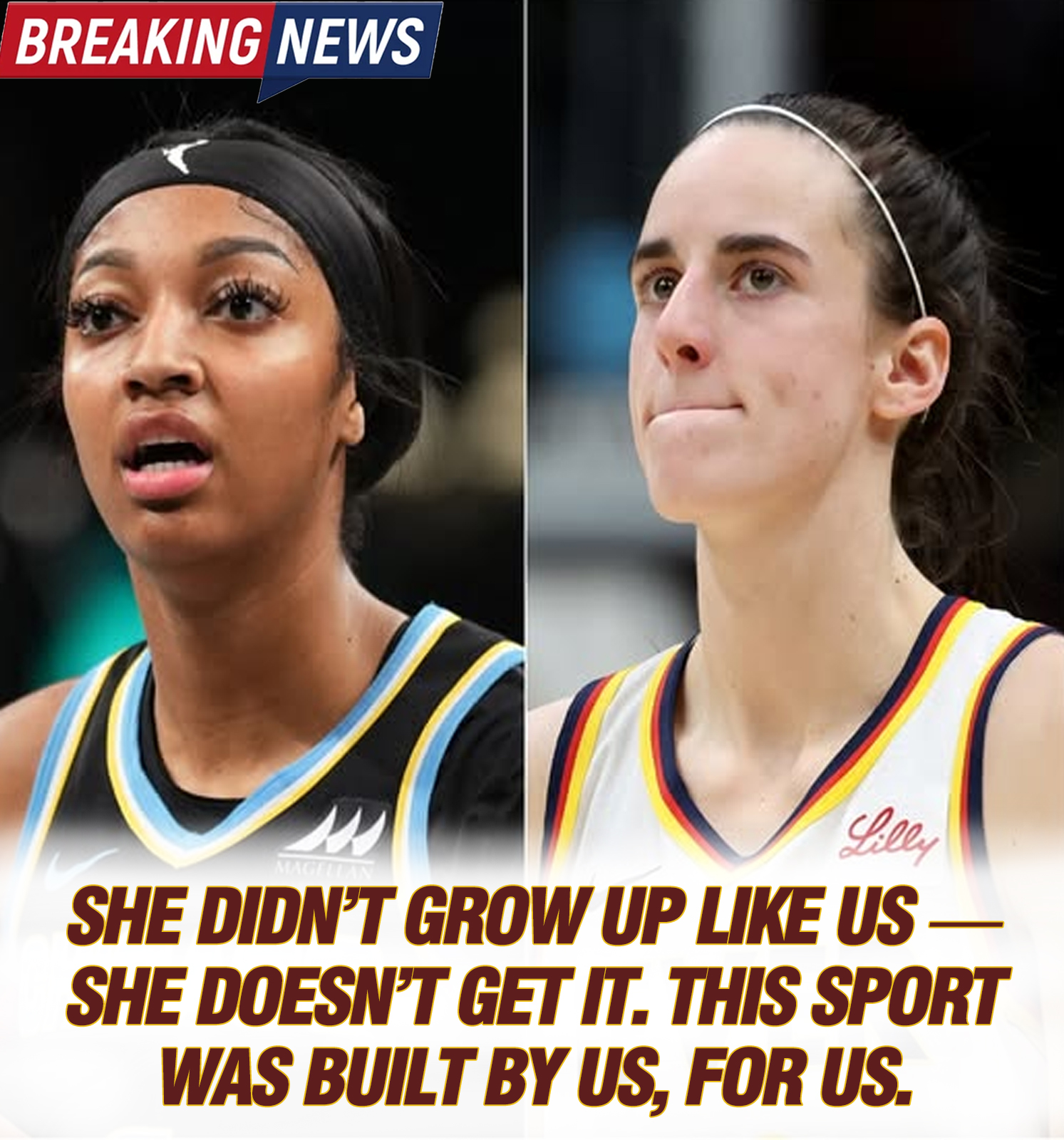
The controversy began when a respected sports journalist published details of a private discussion involving Reese and several unnamed WNBA players. The journalist claims Reese was candid in her assessment of Clark’s rapid rise and the unprecedented attention she has received since entering the league.
“She didn’t grow up like us — she doesn’t get it. This sport was built by us, for us,” Reese allegedly said, according to the report. While the context of the conversation remains unclear, the quote ignited immediate backlash and sparked an intense debate about inclusivity, privilege, and the evolving culture of the WNBA.
Neither Reese nor her representatives have directly confirmed or denied the remark. The Chicago Sky declined to comment on “private locker room conversations,” while Reese posted a cryptic message on social media: “Real ones know. I play for my people and my city. That’s all I’ll ever say.”
The Reaction: Outrage, Support, and Everything In Between
The response to the leaked comment has been explosive. Social media platforms were flooded with hashtags like #StandWithAngel and #RespectTheGame, as fans and fellow athletes took sides.
Some have accused Reese of fueling division within the league and undermining the spirit of unity that women’s basketball has long promoted. “This isn’t what the game is about,” tweeted one longtime WNBA fan. “We should be celebrating the talent and diversity of all players, not drawing lines.”
Others, however, defended Reese’s perspective, arguing that her comments reflect the lived experiences of many Black athletes who have fought for recognition and respect in a league that has only recently begun to receive mainstream attention. “Angel Reese is just saying what a lot of players feel,” wrote a former WNBA player on Instagram. “This league was built on the backs of women of color who never got the spotlight. Now, suddenly, everyone’s tuning in because of one player?”
The Clark Factor: A New Era for the WNBA
Caitlin Clark’s arrival in the WNBA has been nothing short of transformative. The former Iowa Hawkeye has shattered attendance records, boosted TV ratings, and brought millions of new fans to the league. Her popularity has transcended basketball, making her a household name and the face of a new era for women’s sports.
But Clark’s meteoric rise has also stirred uncomfortable questions about who gets celebrated—and why. Critics argue that Clark’s media coverage and endorsement deals far outpace those of equally talented, often Black, players who have been the backbone of the league for years.
“It’s not about hating on Caitlin Clark,” said a sports radio host during a heated debate. “It’s about asking why the WNBA is only now getting this attention, and who’s benefiting most from it.”
The Bigger Conversation: Race, Representation, and Ownership
At its core, the controversy surrounding Reese’s alleged comment is about more than just two players. It’s about the history and identity of the WNBA itself. Since its founding in 1996, the league has been a space where Black women have thrived, often in the face of indifference or outright hostility from mainstream sports media.
For many, Reese’s words—if accurately reported—speak to a sense of ownership and pride in a league that has been built on community, resilience, and cultural influence. “This sport was built by us, for us” is not just a critique of Clark, but a reminder of the sacrifices and triumphs of generations of players who paved the way.
Yet, others caution that such rhetoric risks alienating new fans and players at a time when the league is finally growing. “The WNBA needs to be a place where everyone feels welcome, regardless of background,” said a league executive who requested anonymity. “We can honor our history without closing the door to the future.”
What’s Next for Reese, Clark, and the WNBA?
With the season in full swing and both Reese and Clark continuing to make headlines on the court, the league faces a critical moment. Will this controversy deepen divides, or spark a deeper conversation about unity and progress?
For her part, Caitlin Clark took the high road when asked about the situation after a recent game. “I have nothing but respect for Angel and all the women who’ve made this league what it is,” Clark told reporters. “I’m grateful for the opportunity to compete at the highest level, and I hope we can all keep pushing the game forward.”
As for Angel Reese, her play speaks volumes. In the midst of the media frenzy, she delivered a double-double in her latest outing, earning a standing ovation from Chicago fans. Whether or not she chooses to address the controversy directly, one thing is clear: Angel Reese is not backing down.
The Bottom Line
The WNBA is at a crossroads, with new stars, new fans, and new challenges. The conversation sparked by Angel Reese’s alleged comment is uncomfortable, but perhaps necessary. As the league continues to grow, so too must its willingness to confront hard truths about race, representation, and who gets to claim ownership of the game.
One thing is certain: the eyes of the sports world are watching, and the next chapter in this story is still being written.

 rim123