 mhstien123
These mysterious artifacts were created many centuries ago in great numbers for unknown reasons, and have mostly ended up as lawn ornaments.
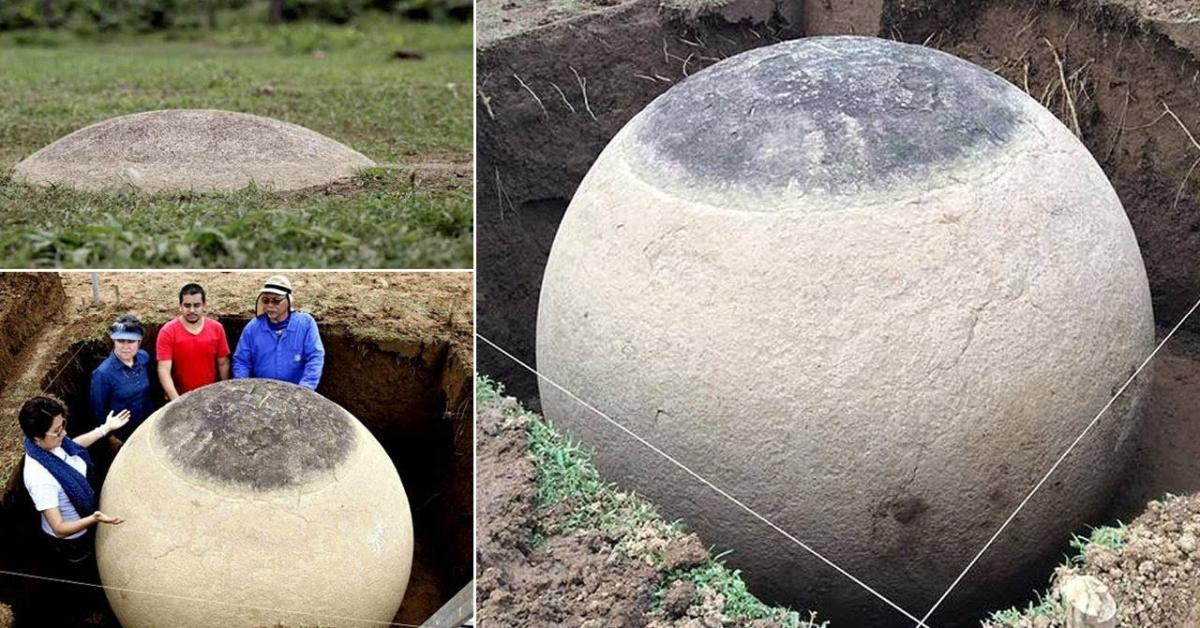
The spheres are commonly attributed to the extinct Diquís culture. Source
At first, they might seem like a new landscaping trend, but in fact these rounded stones are mysterious artifacts that were created centuries ago in great numbers. But we don’t exactly know why.
Located on the Diquís Delta and on Isla del Caño, the stone spheres of Costa Rica are an assortment of over 300 petrospheres also known as bolas de piedra (literally stone balls). The spheres, which look perfectly round, are commonly attributed to the extinct Diquís culture, and are the best-known stone sculptures from the Isthmo-Colombian area.
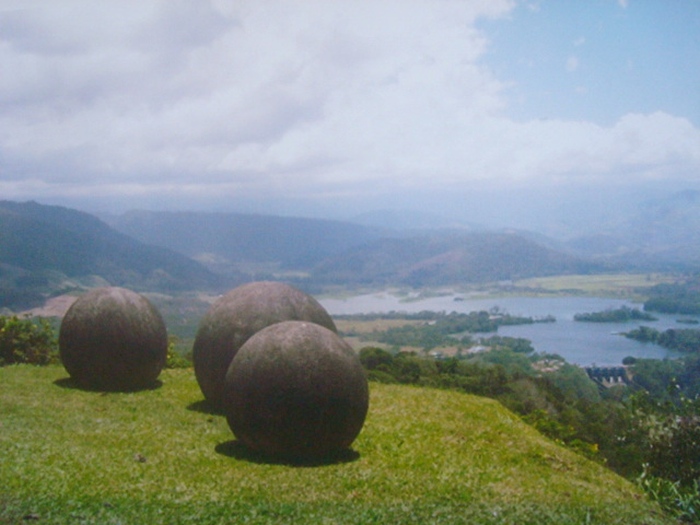
Stone spheres of Costa Rica. Reventazon river view. Photo: Rodtico21
In the 1930s, the United Fruit Company was clearing land in the Diquís Valley of Costa Rica, when workers began unearthing large numbers of almost perfectly round stone spheres. The largest of these undoubtedly man-made balls is over two meters (6.6 ft) in diameter and weighs over 16 tons.
No one actually knows why they were made. There are many theories but little proof. Some believe they denoted rank or kingship, others think they were merely status symbols or perhaps tribe symbols.
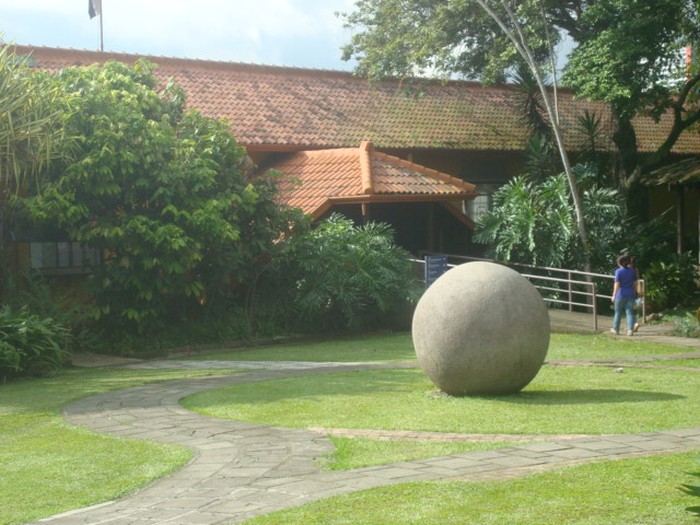
Stone sphere at the Museo Nacional de Costa Rica. Photo: Rodtico21
According to University of Kansas archeologist John Hoopes, “The balls were most likely made by reducing round boulders to a spherical shape through a combination of controlled fracture, pecking, and grinding.” They were likely produced by an extinct civilization of people that existed in the area in the the Aguas Buenas Period (300–800 CE) and Chiriquí Period (800–1550 CE). Their culture disappeared after the Spanish conquest.
The only method available for dating the carved stones would be stratigraphy, but most stones are no longer in their original locations.
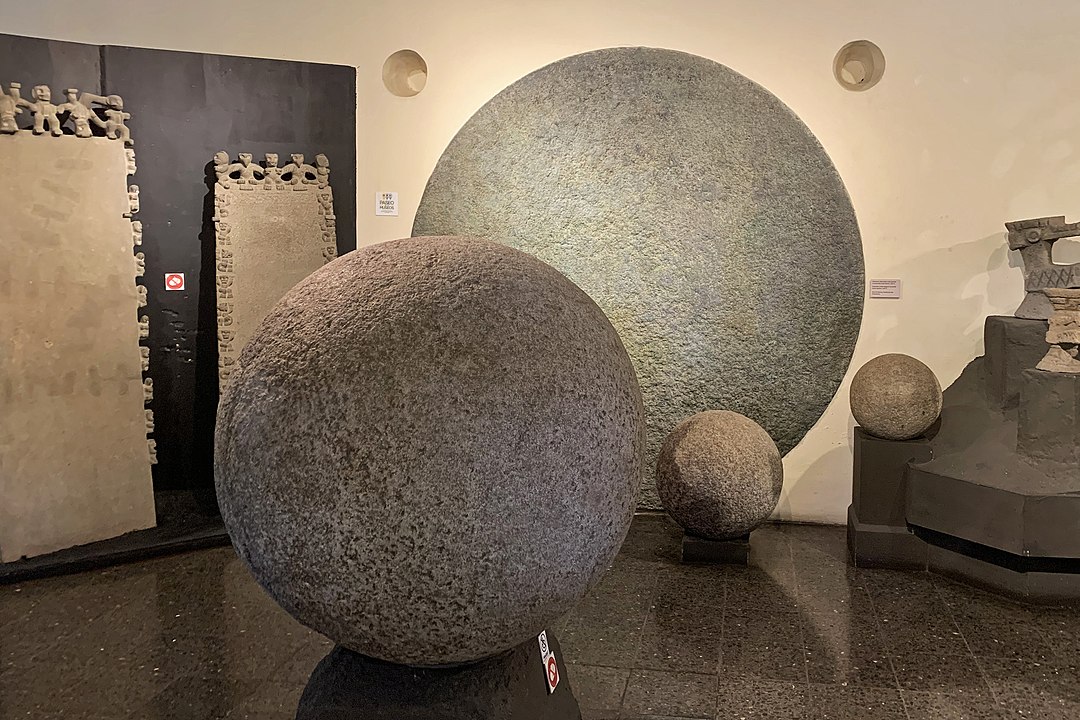
Several stone spheres of the Diquís exhibited at Museo Nacional de Costa Rica. For comparison purpose, the image on the wall shows the diameter of the biggest recorded stone sphere, 2.66 metres (8.7 ft). Photo: Mariordo (Mario Roberto Durán Ortiz)
When the spheres were first discovered, there were rumors of hidden gold inside the spheres so workmen began to drill holes into them and blow them open using dynamite. Unfortunately, many of the spheres were destroyed before authorities intervened and stopped the vandalism.
Some of the dynamited spheres have been reassembled and are currently on display at the National Museum of Costa Rica in San José.
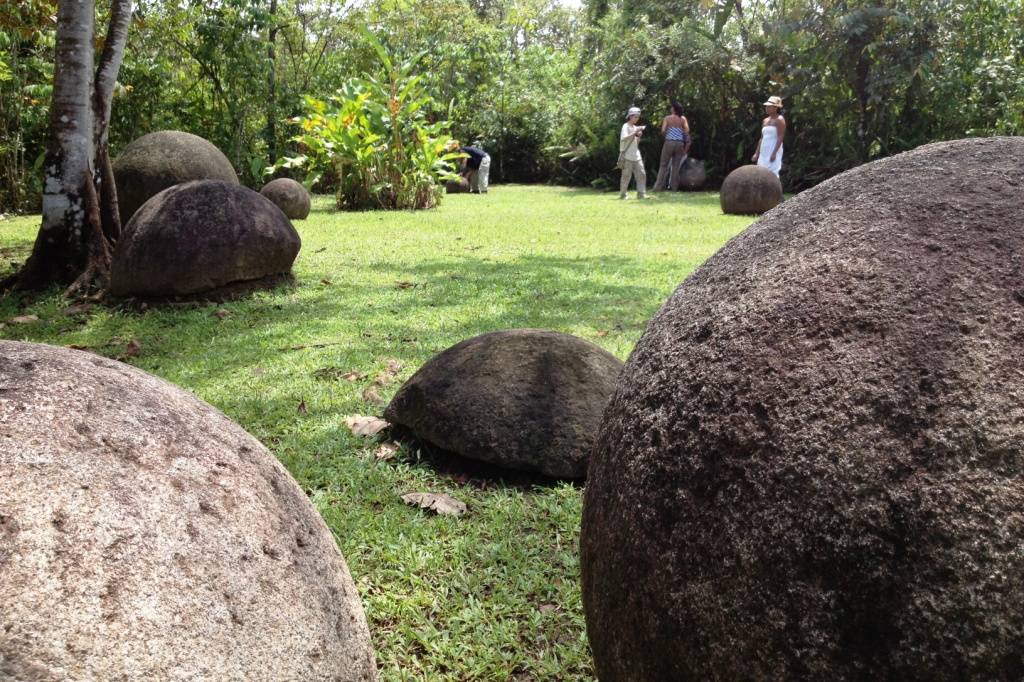
Remains of vandalized spheres at the National Museum of Costa Rica. Photo: Axxis10
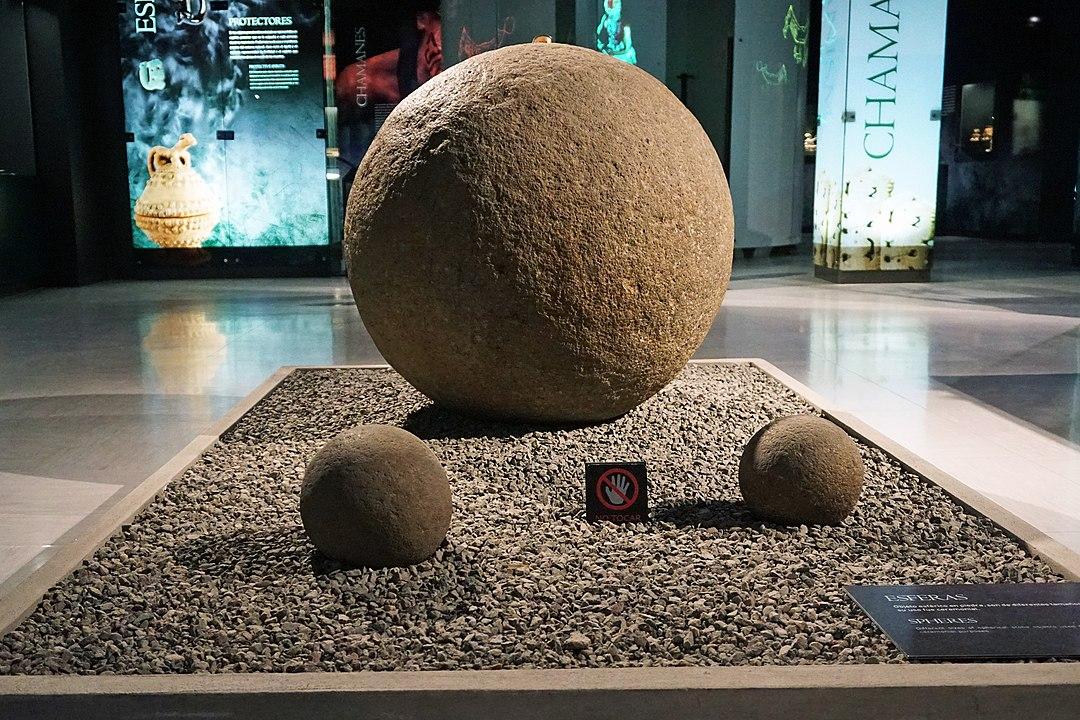
Intact stone spheres of the Diquís exhibited at Museo de Jade del INS, Costa Rica. Photo: Mariordo (Mario Roberto Durán Ortiz)
The stone spheres are regarded as a national symbol and part of the cultural ethos of Costa Rica, therefore it is common to see them installed in government buildings, and they have also inspired many are pieces and installations that you can see all around the country.
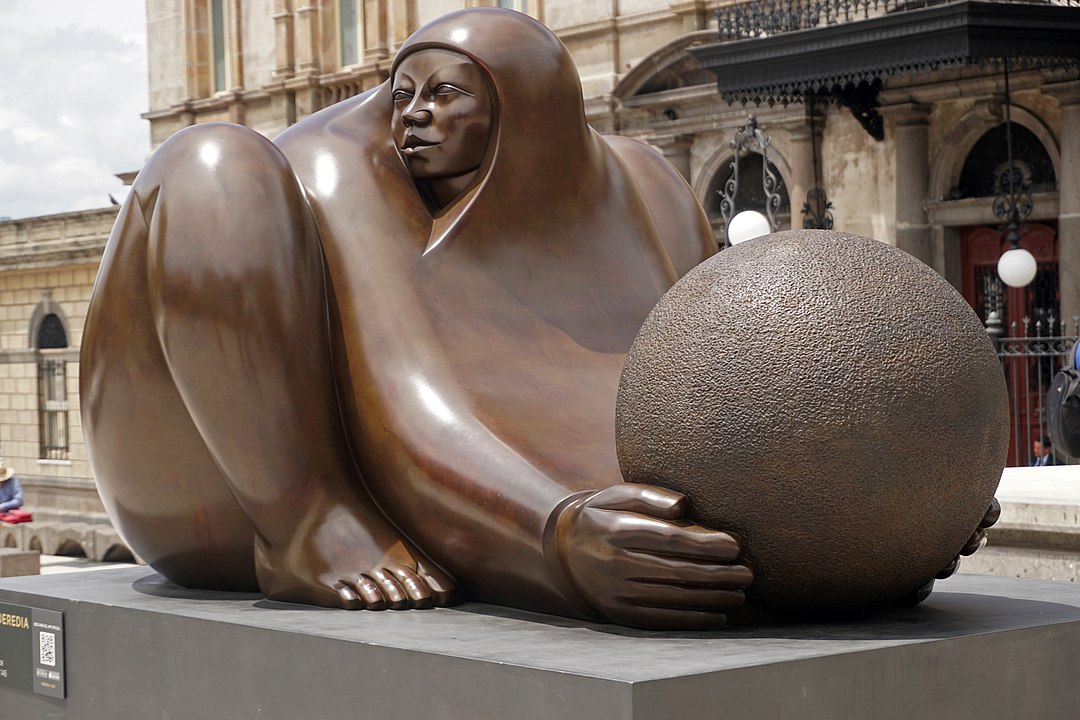
Arruyo from the open air exposition “Jiménez Deredia en San José: La Fuerza y la Universidalidad de la Esfera”, San José, Costa Rica. Photo: Mariordo (Mario Roberto Durán Ortiz)
Many myths surround the stones, including ones that claim they came from Atlantis, or were made as such by nature. In the Bribri cosmogony, which is shared by the Cabecares and other American ancestral groups, the stone spheres are “Tara’s cannon balls”. According to legend, Tara or Tlatchque, the god of thunder, used a giant blowpipe to shoot the balls at the Serkes, gods of winds and hurricanes, in order to drive them out of these lands.
Also, there have been many claims that the spheres are perfect, or near perfect in roundness, although some spheres are known to vary over 5 centimetres (2.0 in) in diameter. Also, since the stones have been damaged and eroded over the years, it is impossible to know exactly their original shape.
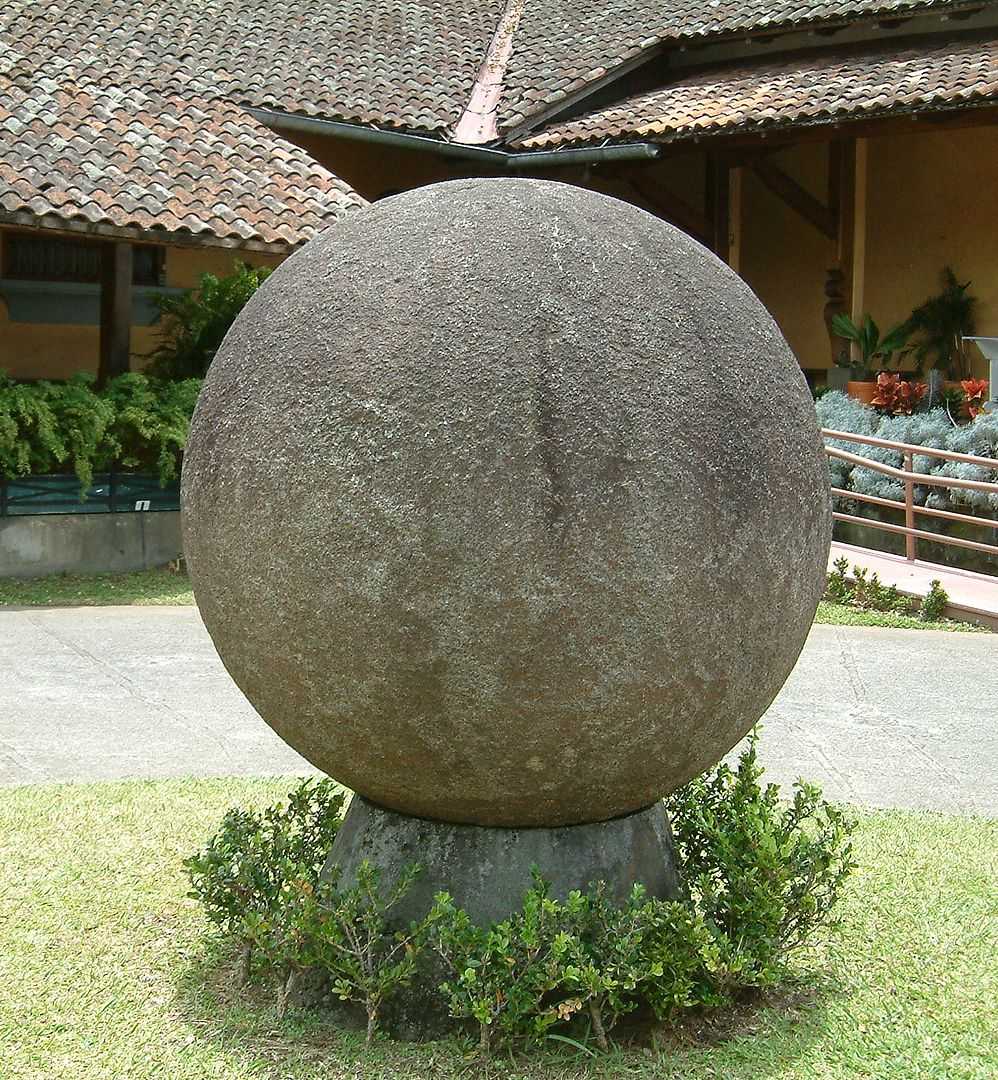
Stone sphere made by the Diquís culture in the courtyard of the National Museum of Costa Rica. Photo: WAvegetarian
By today, virtually all of the spheres have been removed from their original locations, mostly to end up as prized lawn ornaments across Costa Rica, making further research even more difficult.

 rim123